
Home Confinement Overview
The Monongalia County Sheriff's Home Confinement Division is operated by the Monongalia County Sheriff's Office. It is based at 75 High St in Morgantown according to the county directory, with phone numbers listed as (304) 284-7329 and (304) 284-7301 in county and sheriff sources. The program is custody-related, but it is not a detention center. It does not publish a bed count, visitation schedule, booking gallery, or searchable participant roster.
The sheriff's page describes the Home Incarceration Act and Home Confinement Program as a local alternative to physical incarceration. It says the program was established in the mid-1980s under the direction of the West Virginia Supreme Court of Appeals and was crafted by lawmakers from Monongalia County. That local origin is important because home confinement is not just a general probation term in the research. It is a specific sheriff-supervised program for eligible people ordered to serve sentences or conditions at home under strict monitoring.
Benefits listed by the sheriff include living at home with family, maintaining employment, reintegrating into society, reducing taxpayer burden, and requiring clients to pay fees that help defray program costs. The page also states that those fees do not fully fund the program. Because no specific fee schedule was published in the research, no dollar amount should be assumed. Direct contact with the office or court is the right path for a person's current conditions, payment duties, and reporting schedule.
Home Confinement Caseload
Home confinement has a caseload, not a rated jail population. The facility map notes that Monongalia County Sheriff's Home Confinement Office does not publish a bed capacity because participants are supervised in the community rather than housed in a jail dorm or cell block. That distinction should drive any Monongalia County inmate population search. A person on home confinement may be under custody restrictions, but they usually will not appear as a current jail inmate unless they have been removed from the program or booked into North Central Regional Jail after a violation.
The public research did not locate an official online list of home confinement participants, an annual caseload count, or a demographic breakdown for the program. That gap matters. It prevents a page from treating the office like the regional jail or inventing population statistics. The available sourced facts are the program type, operator, address, phone numbers, supervision tools, local history, general benefits, and the consequence that violations can result in incarceration at North Central. Those facts are enough to explain how to route lookup questions without creating a fake roster path.
Roster note: No public home confinement roster was found; use court records and sheriff contacts for participant-specific questions.
Look Up Home Confinement Status
There is no confirmed public online roster for Monongalia County home confinement participants. The lookup chain begins with the court case and the sheriff's home confinement office. If the person is currently held in physical jail custody, use the WV Regional Jail Offender Search and the Daily Incarcerations page. If the person is under a court order but not booked in jail, use West Virginia Magistrate Case Record Search and the relevant Monongalia court clerk contacts to confirm the case status.
The sheriff's office can answer public-facing program and contact questions, but court files control the legal terms of a sentence, bond condition, or post-conviction order. Magistrate Court handles many misdemeanor and preliminary matters, while the Circuit Clerk is tied to felony circuit records. When a violation occurs, the sheriff's home confinement page says removal from the program can lead to incarceration at North Central Regional Jail. At that point, the state regional jail roster may become the correct custody search tool.
- Search the court case by name or case number in West Virginia Magistrate Case Record Search.
- Call the Monongalia County Sheriff's Home Confinement Office for public program routing and current contact procedures.
- Check the WV Regional Jail Offender Search if a violation or arrest may have led to booking at North Central.
- For court-file copies, contact Magistrate Court for misdemeanor records or the Circuit Clerk for felony records.
Home Confinement Contact
The Home Confinement Office is listed separately from the main sheriff's office. The county directory gives 75 High St, Morgantown, WV 26505, with a Home Confinement phone number of (304) 284-7329. The sheriff contact page lists Home Confinement at (304) 284-7301. The main sheriff's office at 116 Walnut Street remains the broader law-enforcement contact for reports, press releases, wanted posts, and sheriff services.
Monongalia County Sheriff's Home Confinement Office
75 High St
Morgantown, WV 26505
(304) 284-7329
Alternate listing: (304) 284-7301
Monongalia County Sheriff's Office
116 Walnut Street
Morgantown, WV 26505
(304) 291-7260
Sheriff records, reports, and general law-enforcement contact.
Home Confinement Supervision
Home confinement has supervision contacts rather than public jail visits. The sheriff's page says officers receive Monongalia sheriff training and ongoing training to meet or exceed state standards. Officers perform unannounced visits, check for drug or alcohol use, review unapproved associations, and enforce curfew rules. The page also identifies random drug screenings as part of program supervision. These requirements mean home confinement is still custody, even when the person is not sleeping in a jail building.
Monitoring technology is specifically documented. The sheriff lists GPS ankle bracelets, drug and alcohol field tests, and breathalyzers. The purpose is to enforce court conditions while still allowing the participant to live at home and, when permitted, keep working or handling family duties. A reader should not use jail visitation assumptions here. Contact with a participant is governed by the court order, sheriff supervision rules, and any restrictions in the criminal case.
| Supervision Area | Documented Detail | Custody Effect |
|---|---|---|
| Unannounced visits | Officers may check the residence without advance notice. | Confirms compliance at home. |
| GPS monitoring | GPS ankle bracelets are listed by the sheriff. | Tracks movement and zone compliance. |
| Drug and alcohol checks | Random drug screens, field tests, and breathalyzers are documented. | Tests for prohibited use. |
| Curfew and associations | Officers check curfew violations and unapproved associations. | Can trigger violation action. |
| Violation response | Removal from the program can lead to North Central jail custody. | Changes community custody to jail custody. |
Program Fees and Communication
The sheriff's home confinement page says clients pay a fee that helps defray costs, but it also says those fees do not fully fund the program. The research did not locate a published fee schedule, accepted payment methods, online payment link, or due-date table for Monongalia County home confinement. For that reason, fee content should stay general and route the person to the office or court order. No commissary deposit, inmate trust account, or package vendor applies to this office because it is not a jail.
Communication rules are also different from jail phone rules. Home confinement participants live at home under restrictions, so family contact is usually governed by the court order and supervision rules rather than a jail phone vendor. If a no-contact order, curfew, location exclusion, or association restriction exists, the court order controls. For a person who has been removed from home confinement and booked at North Central, the regional jail's visitation, phone, and deposit rules replace home supervision procedures.
- Home confinement
- Court-ordered custody in the community with strict monitoring instead of jail housing.
- Violation
- A breach of supervision terms, such as curfew, substance use, travel, or contact restrictions.
- Removal
- The process that can move a participant from home confinement to North Central Regional Jail custody.
Home Confinement Intake
Home confinement intake is not the same as jail booking. A person is not admitted to a cell block, placed on a public booking list, or processed through a visitation kiosk just because home confinement has been ordered. The legal authority comes from a court order or sentence, and the sheriff's office supervises the person according to those terms. Intake may involve setting up monitoring equipment, explaining curfew and travel rules, reviewing fee obligations, and scheduling reporting or compliance checks.
If the person is awaiting a court appearance or has a new charge, check the court record first. If the person was recently arrested, use the regional jail search to see whether they were booked at North Central. If the person has been sentenced to home confinement, the public case file may show the order or disposition, but the detailed day-to-day supervision record may not be posted online. West Virginia FOIA can be used for public records, but requests must go to the proper custodian and may be limited by exemptions.
About Home Confinement Records
The home confinement program is a major Monongalia-specific custody option because it keeps eligible people in the community while enforcing court conditions. That makes it different from FPC Morgantown, which is federal prison custody, and different from North Central, which is a regional jail. It also explains why there is no mugshot or bed-count treatment for this office. A person may be under custody restrictions and still not show as an inmate in the jail roster.
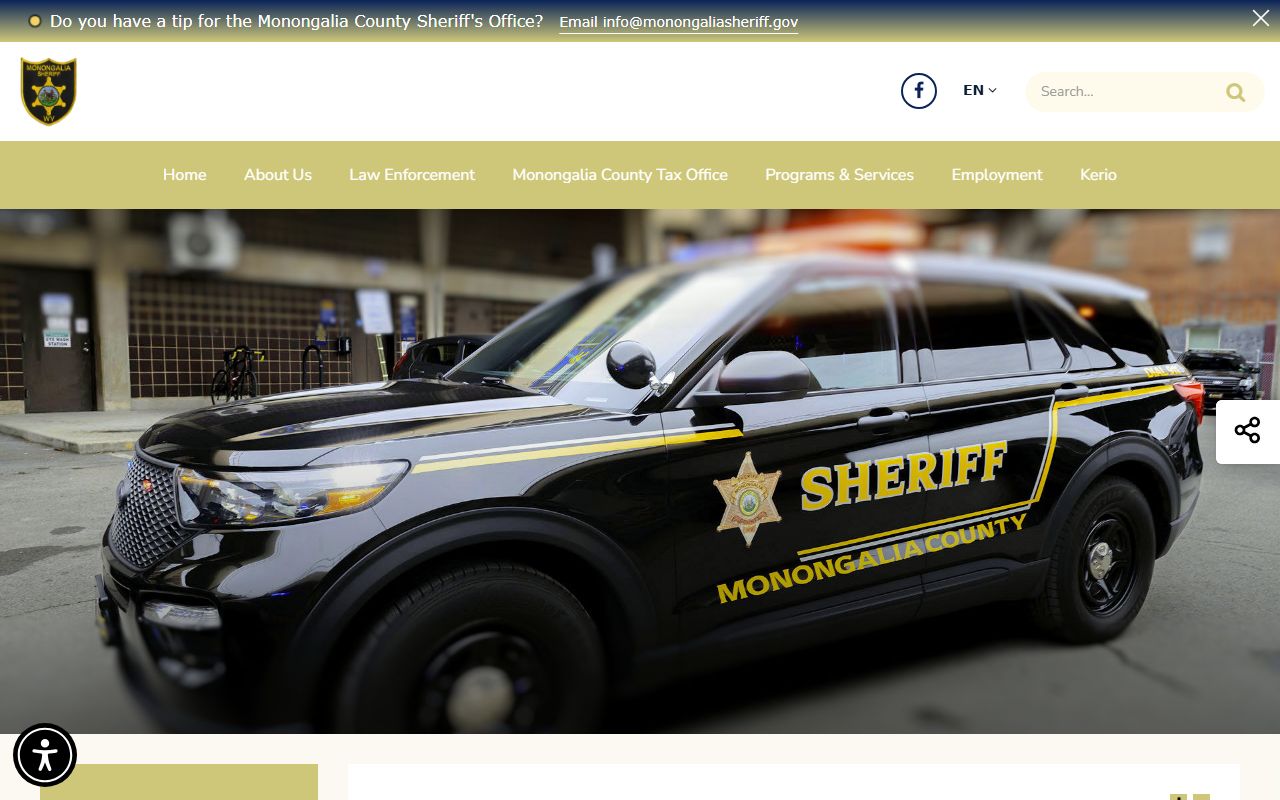
The official sheriff home confinement page is the best source for program purpose and monitoring methods. The page is directly matched by the screenshot below, which shows the local sheriff source used for this facility. The image should be read as a source reference, not as a roster or participant list.
The Monongalia County Sheriff's Home Confinement Division page identifies the program as an alternative to incarceration and describes its supervision tools.
For jail custody after a violation, use North Central Regional Jail and Correctional Facility rather than treating the home confinement office as a jail.
Note: Confirm any participant-specific condition through the court order or sheriff's home confinement office.